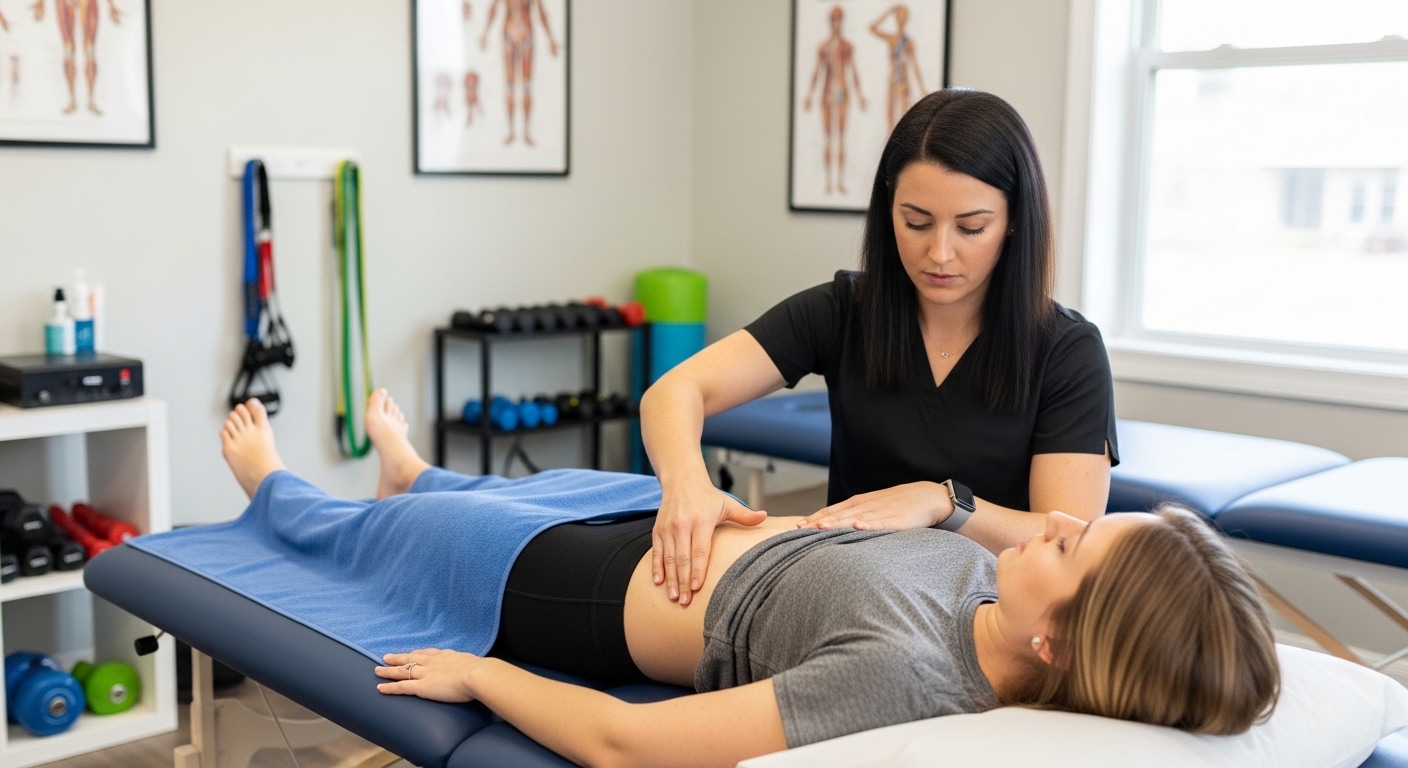
How Specialized Therapy Helps Pelvic Health
Are you living with symptoms you find difficult to talk about? Perhaps you’re struggling with incontinence, sexual dysfunction, or endometriosis. Maybe you’ve developed a pelvic organ prolapse.
While these conditions can sound scary, they’re very treatable. Unfortunately, they often stem from issues related to pelvic health, and many people will live with pain and discomfort due to being uncomfortable sharing their concerns.
At Moore Myoworx, we want to change that. Our therapists frequently help people manage their pelvic health, offering private rooms and a judgment-free zone where you can share your symptoms and get the treatment you need.
Today, we want to explore pelvic health: what it is, how it can impact your life, and how our specialized therapy services can help improve it.
Still have questions? Our friendly staff is happy to answer them. We’re just a phone call away!
What Do We Mean by Pelvic Health?
Your pelvic floor is a sling of muscles at the base of your core. It acts as a “hammock” for your pelvic organs, including your bladder, bowels, prostate (in men), and sexual organs (in women). When the pelvic floor is healthy, it supports those organs and helps them function properly. But when it becomes impaired–such as being weak or overly restricted–you can experience several different symptoms.
Anyone can experience issues with their pelvic floor, although the exact concerns can vary somewhat with gender. Here are some of the common complaints we help treat:
Urinary Incontinence
- Anyone can develop urinary incontinence, although it is more common in women. This can include stress incontinence (leaking when laughing or coughing), urge incontinence (having an overwhelming need to go), or a combination.
Pelvic Pain
- Pelvic pain can have a variety of causes, from nerve issues to gynecological conditions like endometriosis. We’ll help determine the cause and find the right treatment option for your needs.
Sexual Dysfunction
- For women, sexual dysfunction can include painful intercourse or difficulty with orgasm. For men, it can include erectile dysfunction or painful ejaculation. But either way, pelvic floor impairment is often the culprit.
Pelvic Organ Prolapse
- This occurs when the pelvic organs slip out of place. It can affect both men and women and develops due to weakened pelvic floor muscles.
Pregnancy/Postpartum Discomfort
- The changes that occur in your body during pregnancy can lead to pelvic and lower back pain, urinary incontinence, and other musculoskeletal concerns.
What Treatment Options Do We Offer?
Treatment for pelvic health concerns varies depending on the cause. That’s why our team will spend your first session taking your health history, reviewing your symptoms, and running several screens so we can provide you with the interventions you need.
Here are some of the common treatment options we use to improve pelvic health:
Pelvic Floor Exercises
- We’ll show you tailored exercises designed to stretch and strengthen your pelvic floor muscles–and ensure you’re performing them correctly.
Manual Therapy
- Certain hands-on pain relieving techniques, such as myofascial release, can help ease muscle tension that can contribute to pelvic pain and dysfunction.
Electrical Stimulation – TM20
- This device can precisely target distressed areas to deliver a specified sequence of timed and abrupt electrical frequency changes.
Lifestyle Modifications
We’ll help you find lasting relief by addressing other factors that might contribute to pelvic floor dysfunction, such as regular exercise, nutrition, and more.
Ready to Get Started?
At Moore Myoworx, we understand how challenging it can be to live with pelvic floor dysfunction. Worse, many people will suffer for years due to the shame surrounding common symptoms related to poor pelvic floor health.
We want you to know there’s nothing to be ashamed of–and our therapists have heard it all! Take control of your health and well-being, starting with your pelvic health. All of our clinics offer pelvic health services – call today to make your appointment!
Sources
https://www.ncbi.nlm.nih.gov/pmc/articles/PMC8182461/
https://link.springer.com/article/10.1007/s40141-020-00273-5

“Life-Changing Migraine Relief”
“I can’t say enough about the wonderful work the team does at Moore MyoWorx. I have had migraines for my entire adult life, with multiple neurologists and primary care physicians trying to help but not making an impact. Moore MyoWorx did a very thorough intake that identified the physiological source of my migraines and provided me with a personalized physical therapy plan that not only helps to relieve a migraine as it’s happening but soothes and strengthens the ‘problem’ muscles to prevent future migraines. After a few weeks of treatments, my well-being was in my own hands, which is a very empowering experience. Within the span of a few months, I went from daily migraines to going weeks at a time without one. The team at Moore (shoutout to Lily!) is extremely empathetic and helpful, and they really go out of their way to support you on your recovery journey. I can’t recommend Moore MyoWorx enough.”
– Skylar Z.

The Pelvic Floor’s Connection to Back, Hip, and Core Pain
When people think about back, hip, or core pain, the pelvic floor is rarely the first thing that comes to mind. But in reality, these areas are deeply connected, and when one isn’t functioning well, the others often pick up the slack.
The pelvic floor is a group of muscles that works together with your deep core muscles, diaphragm, hips, and spine to provide stability and support during movement. It plays a key role in posture, balance, breathing, and load management. If the pelvic floor is too tight, too weak, or not coordinating properly, it can change how the rest of the body moves and stabilizes.
For example, unresolved pelvic floor dysfunction can contribute to chronic low back pain by altering core support. Hip pain may develop when surrounding muscles overwork to compensate for poor pelvic stability. Even persistent “core weakness” can stem from a lack of coordination between the pelvic floor and deeper abdominal muscles – not a lack of effort or exercise.
This is why some people continue to struggle with pain despite stretching, strengthening, or traditional core workouts. The missing piece may not be more exercise, but rather a better understanding of how these systems work together.
At Moore MyoWorx, pelvic health is approached as part of the whole body, not in isolation. Each patient receives a personalized evaluation to understand how their pelvic floor, hips, spine, and breathing patterns interact during everyday movements. Treatment is then tailored to restore balance, coordination, and confidence in movement.
If you’ve been dealing with ongoing back, hip, or core pain and haven’t found lasting relief, addressing pelvic floor function may be the missing link. A specialized, individualized approach can make all the difference, not just in reducing pain, but in helping you move and live more comfortably.
Our Mission & Purpose
At Moore MyoWorx Denver, we believe that true healing happens when you’re seen, supported, and empowered, not just treated. Rooted in our core values of Providing Relief, Restoring Hope, Imparting Knowledge, and Empowering Patients, our mission is to walk alongside you in your recovery journey, every step of the way. We aim not just to address symptoms, but to restore your well-being so you can reclaim your life.
We are proud to share that 90% of our patients experience an improvement of 62% over 6 treatments. That’s what our approach, expertise, and commitment to you are all about.
If you’ve experienced the difference Moore MyoWorx has made, we hope you’ll consider sharing us with your friends or family who might benefit. There’s nothing more rewarding than helping someone else find hope, healing, and a path forward.
Exercise of the Month
Bridging
(Glutes, Lower Back, Hamstrings)
Begin on your back. Bend your knees and keep your back flat on the ground. Gently, contract your abdominals and hold to keep your back flat as you move up into the bridge position. Remember to breathe. Gently, squeeze your butt muscles and lift your hips off the ground. The goal is to have your hips aligned with your knees and shoulders. Hold for 5 seconds. 3 Sets, 10 Reps.

Turkish Lentil Soup (Mercimek Çorbası)
Turkish Red Lentil Soup (Kırmızı Mercimek Çorbası) is velvety, comforting, and nutritious! Plus, it’s so easy to make with lentils, a few veggies, and spices like Aleppo pepper! Naturally gluten-free, and with a simple swap for a vegan option, this Turkish lentil soup is ready in about 30 minutes.
Ingredients:
- 5 tablespoons extra virgin olive oil
- 1 medium yellow onion, chopped
- 3 garlic cloves, minced, divided
- 2 to 3 carrots, peeled and chopped
- 1 medium russet potato, peeled and small diced or chopped
- Kosher salt
- 2 tablespoons tomato paste
- 6 cups low-sodium vegetable broth
- 2 teaspoons Aleppo pepper, divided
- 1 teaspoon cumin
- ½ teaspoon coriander
- 1 cup red lentils, picked over and rinsed
- 1 large lemon, cut into wedges
Instructions:
1. In a large Dutch oven or cooking pot, heat 2 tablespoons extra virgin olive oil over medium-high heat until shimmering.
2. Add the onions, 2 minced garlic cloves, carrots, and potatoes. Season with a good dash of kosher salt, and cook, stirring occasionally until the vegetables have softened (about 5 to 7 minutes).
3. Add the tomato paste and toss to coat the vegetables with the paste, then add the broth, 1 teaspoon of Aleppo-style pepper and the rest of the spices.
4. Add the lentils and stir.
5. Allow the soup to come to a rolling boil for 4 to 5 minutes, then lower the heat and cover the Dutch oven with the lid leaving a small opening.
6. Let the soup simmer on the lowest heat setting for about 15 to 20 minutes or until the lentils and the vegetables are completely tender. (Check occasionally and give the soup a stir as needed. If it is getting too thick, add a little bit more vegetable broth about ½ to 1 cup more).
7. Remove the pot from the heat and carefully blend the soup using an immersion blender until smooth and creamy. (Alternatively, transfer the soup to a standard blender, let some of the steam escape. Blend in batches until all of the soup is smooth.)
8. To finish, in a small skillet, warm about 3 tablespoons extra virgin olive oil over medium heat. Add the remaining Aleppo pepper and minced garlic and cook briefly until the garlic is golden brown and the oil has taken on a red hue from the Aleppo pepper. Remove from the heat and pour the warmed oil all over the soup.
9. Serve with lemon wedges to the side.
Contact us for an appointment
If you’re dealing with pelvic health issues that makes everyday life harder than it should be, you don’t have to navigate it alone.
Contact Moore Myoworx today to learn more about how we can help you get back to living life the way you want!