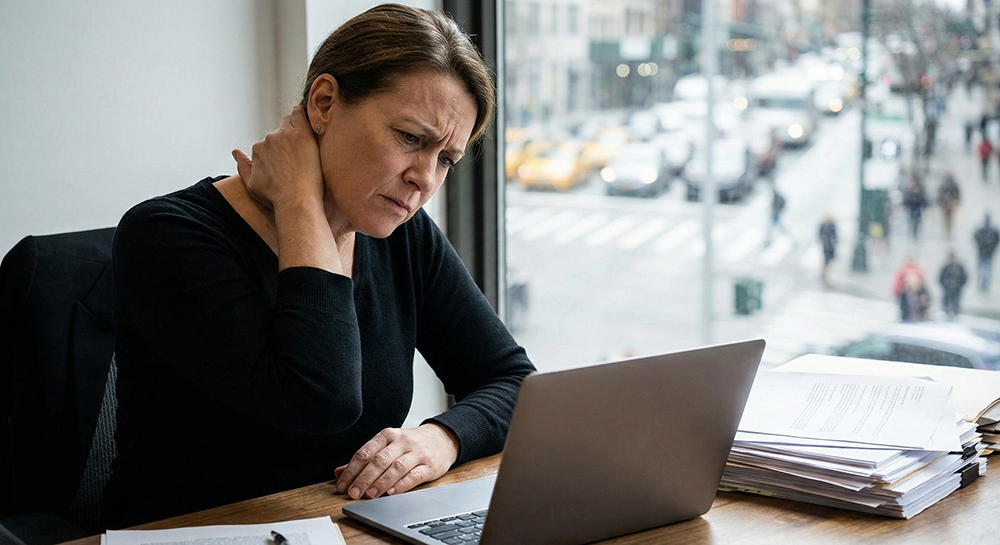
Are You Living With Jaw Pain? TMD Could Be The Culprit
Do you suffer from headaches, grinding of your teeth, clicking of your jaw or even ear pain? You’re not alone! These can all be signs of a condition known as Temporomandibular Joint Disorder (TMD).
This is a disorder of the jaw muscles and nerves caused by injury to the TMJ (the temporomandibular joint), which is the joint between your jaw and skull. A physical therapist can take a look at your symptoms and help to diagnose you if this is what has been causing your discomfort!
If you’re living with this condition, don’t fret! The skilled physical therapists at Moore Myoworx are here to help you find true pain relief once and for all. Call our clinic today and cut the cord tying you to your pain!

“…in 2 weeks I saw an 80% plus reduction in the chronic, debilitating pain“
“I spent years and years with terrible neck and jaw pain. I saw so many dentists and doctors and chiropractors, and all of them came to the same conclusion: you’re just a little bit broken, sorry. I found Moore MyoWorx in a moment of desperation, and I am beyond grateful I reached out for a consultation, because in 2 weeks I saw an 80% plus reduction in the chronic, debilitating pain I’d been living with for literal years. This place taught me how to very specifically ease my own discomfort and pain, and how to keep it at bay for longer and longer periods. The whole office is kind and knowledgeable and they really, really want you to feel better. I can’t recommend them enough.”
—Jill S. — Actual 5-Star Google Review

Common causes of TMD
According to ChoosePT, TMD is so common that it currently affects more than 10 million people in the United States. That’s a lot! There are several reasons you may be experiencing symptoms of TMD.
Multiple factors contribute to the muscle tightness and dysfunction that characterize this condition. Most often, poor posture and neck alignment change the pull of the muscles that make your jaw move. This causes painful grinding and irritation of the TMJ.
Other causes may include:
- Poor alignment of or trauma to the teeth or jaw (malocclusion)
- Clenching of the jaw (bruxism)
- Lockjaw (trismus)
- Teeth grinding
- Poor posture
- Stress
- Arthritis or other inflammatory musculoskeletal disorders
- Excessive gum chewing
When you see a physical therapist for pain relief for TMD, they may ask you questions about your daily life including stressors and chronic conditions that could be causing your pain.

Symptoms of TMD
There are several ways to know if you may be dealing with TMD, although the best way to find out for sure is to visit with a Moore Myoworx physical therapist!
When a person has TMD, the injured joint leads to pain with chewing, clicking, and popping of the jaw; swelling on the sides of the face; nerve inflammation; headaches; tooth grinding; and sometimes dislocation of the temporomandibular joint. The bad news is that this condition can make everyday things such as talking and eating pretty uncomfortable. The good news is that a lot can be done to help TMD disorder, first starting with a thorough evaluation of your problem with our expert physical therapists!
Exercise of the Month
Neck Glide
(Neck)
Stand tall with your shoulders relaxed and your head in a neutral position. Gently draw your head straight backward, keeping your chin level, like you’re trying to make a double chin. Avoid tilting your head up or down. Hold briefly, then return to the starting position. 3 Sets, 10 Reps. (Materials needed: none)
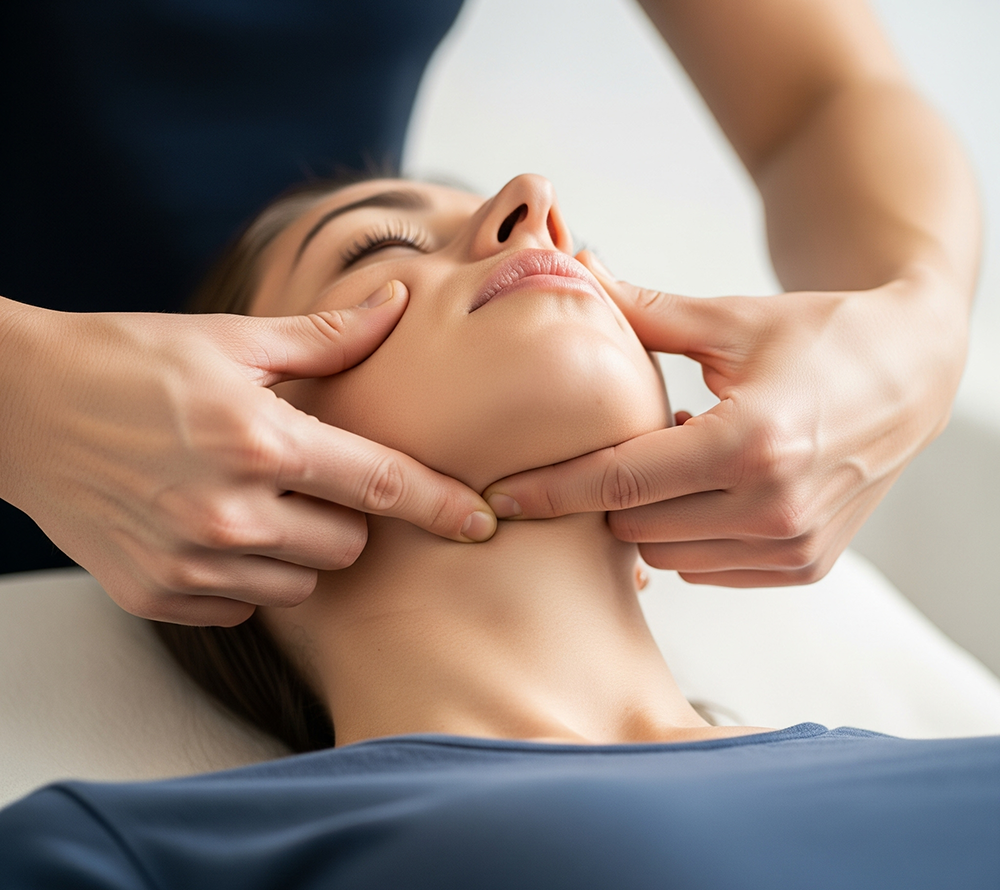
How can a physical therapist help with TMD?
Dentists and orthodontists aren’t the only ones who can treat TMD disorder. Physical therapists can as well. At your first appointment with Moore MyoWorx, a thorough examination of your neck, shoulders, and thoracic spine will be performed to determine whether those structures are causing your symptoms.
Once the root cause of your problem has been discovered, a comprehensive plan can be developed to quickly relieve your pain and restore natural movement to your TMJ. Furthermore, our physical therapists will teach you techniques for regaining normal jaw movement for long-lasting results.
The focus of physical therapy for TMD is relaxation, stretching, and releasing tight muscles and scar tissue. In most cases, physical therapy can resolve TMD and prevent the need for surgery.
However, in cases where surgery is absolutely necessary, physical therapy is a vital part of the recovery process, as it helps minimize scar tissue formation, muscle tightness, and allows for a complete recovery.
Your recovery plan may involve a range of procedures and modalities, such as jaw exercises, soft tissue massage, joint mobilization, myofascial methods, electrical stimulation, and ultrasound. Your PT will also work with you on improving your posture as well since this can contribute to TMD-related pain.

Give us a call today
If you’re living with jaw pain and discomfort, it’s worth calling Moore MyoWorx to set up an appointment to have your condition assessed. On the chance that TMD disorder is the culprit, our physical therapists will do everything in their power to give you the pain relief you deserve, and help you to experience less discomfort when you’re talking, chewing, yawning, etc.
What are you waiting for? Relief is a call away, so reach out today to set up an appointment!
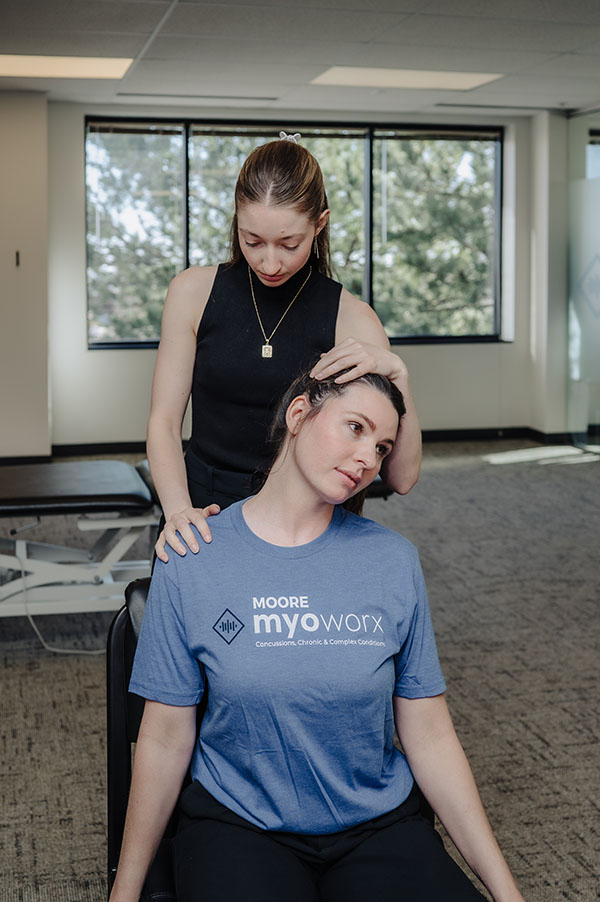
Text Neck Syndrome: Causes, Symptoms, and Prevention
Don’t let your mobile device be a pain in the neck!
Are you reading this article on your phone? If so, you’re likely looking down as you read these words–which puts your neck at a pretty uncomfortable angle. If you lift your phone by just a few inches, your neck should settle into a more neutral position.
There! Doesn’t that feel better?
Mobile devices have given rise to a new term: “text neck.” Text neck is an overuse injury resulting from the position most of us fall into when looking at our phones. It can cause several different symptoms, including neck pain and headaches.
The Symptoms of Text Neck
Text neck isn’t really a new condition, but rather a catchy name for a repetitive use injury of the neck.
People with this type of repetitive use injury do show several common symptoms, including the following:
- Pain: This pain can be located in the neck, upper back, or shoulders and varies in intensity and sensation. Some people report a sharp, stabbing pain in one area, while others complain of a general soreness across the neck and shoulders.
- Stiff Neck: Along with pain, some people report stiffness and immobility in their necks.
- Rounded Posture: A particular posture is associated with text neck–a forward head position and rounded shoulders. This posture results from weakened, imbalanced muscles.
- Headaches: Some people experience tension-type headaches due to tight neck and upper back muscles.
Tips for Preventing and Treating Text Neck
The best way to address text neck is to prevent it from developing in the first place! As with any overuse-type injury, your best prevention tool is movement. Don’t spend too long on your cell phone without taking frequent breaks, and avoid holding your neck and head in any one position–especially the classic “hunched over” position.
It’s also important to hold your device so that you can place your head and neck in a more neutral position. This is actually true not just for cell phones but for books, e-readers, or computers. If it’s a handheld device, hold it up so that it’s level with your gaze. Set laptops or computer monitors up as ergonomically as possible so you aren’t bending down to see your screen.
However, if you’re already struggling with symptoms from text neck, the physical therapists at Moore MyoWorx can still help! A few weeks of rehabilitation can address your symptoms, helping to reduce pain and stiffness. Our team will help you find a solution that works for you, pulling from the following techniques:
- Manual Therapy: We’ll begin with hands-on manual therapy techniques such as soft tissue and joint mobilization, which can help address pain and stiffness.
- Pain Management: We can help address pain acutely with hot or cold therapy, tissue mobilization, and targeted exercises.
- Stretches and Strengthening Exercises: We’ll start with simple stretches to improve the range of motion in your neck, then move on to exercises that help strengthen your neck, shoulder, and upper back muscles. By strengthening these areas, you’ll see improvements in your overall posture.
- Postural Corrections: We’ll also address any postural issues we notice and provide you with strategies for being aware of good posture habits when using your cell phone.

Easy Berry Yogurt Parfait
- 1 cup Greek yogurt
- 1/2 cup granola
- 1/2 cup mixed berries
- 1 tbsp honey
Start by adding a layer of Greek yogurt to a glass or jar. Next, sprinkle some granola over the yogurt, followed by a layer of mixed berries. Repeat the layers until you reach the top, finishing with a drizzle of honey.
Fun Tip: For extra crunch, toast the granola lightly before adding it. Want a protein boost? Mix a spoonful of nut butter into the yogurt!