
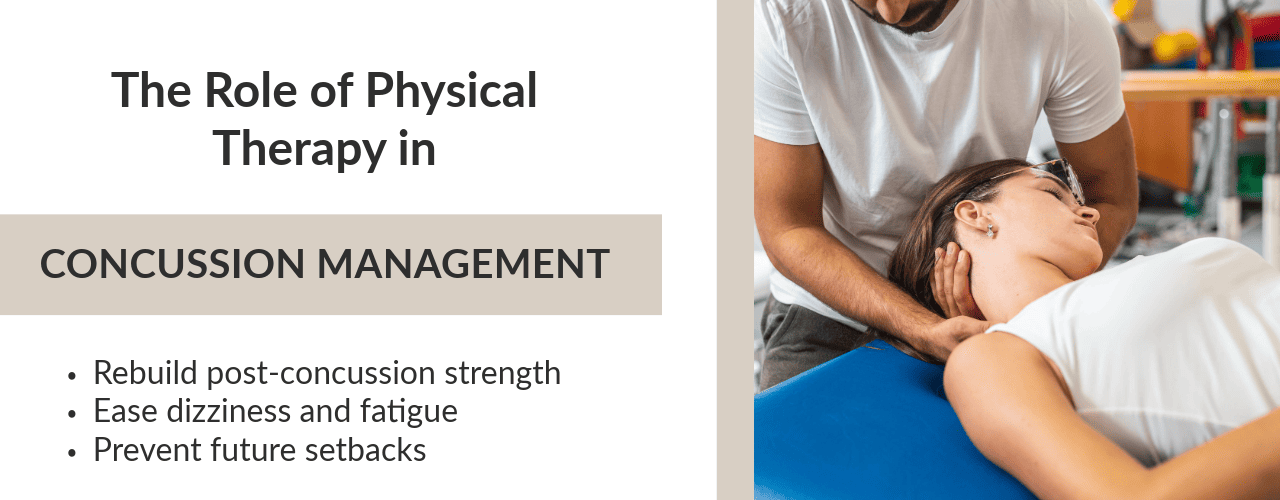
A concussion is a mild traumatic brain injury that can cause problems with memory, balance, vision, and movement. While most people recover within a few weeks, some continue to struggle with lingering symptoms that affect daily life. That’s where concussion management physical therapy comes in. Physical therapists provide targeted treatment that helps patients return to activity safely, reduce discomfort, and improve function through guided recovery.
Why Concussion Symptoms Can Linger
After a concussion, the brain may take time to regain normal function. The impact disrupts how brain cells communicate. This leads to symptoms like:
- Headaches
- Dizziness or balance trouble
- Light or sound sensitivity
- Neck stiffness
- Brain fog or poor focus
Some people feel better quickly. Others experience lasting effects that interfere with school, work, or physical activity. These ongoing symptoms may come from more than just brain changes. The neck, inner ear, and visual system can all be affected by the same impact.
Standard Care Isn’t Always Enough
Traditional concussion care often starts with rest. Patients are advised to limit physical and mental activity for a few days. Then, they slowly return to normal routines. This method works well for many people. But when symptoms persist, rest alone may not be enough.
Without a plan that includes movement and gradual challenge, recovery can stall. People may avoid activity out of fear. Others may try to return too soon and make symptoms worse. This is where guided support becomes essential.
How Physical Therapy Supports the Brain and Body
Physical therapy helps treat the physical effects of a concussion that might not go away on their own. Therapists are trained to evaluate how the neck, balance system, eyes, and muscles are working together. They build a treatment plan based on what the body needs to heal and function better.
Concussion management physical therapy may include:
- Balance training to improve coordination and reduce fall risk
- Neck exercises to relieve pain and restore normal movement
- Activity pacing to increase tolerance without causing flare-ups
- Education on how to return to work, school, or sports safely
Each part of therapy is introduced at the right time to avoid setbacks and support steady progress.
Individualized Concussion Management Physical Therapy Makes a Difference
No two concussions are the same. That’s why every treatment plan needs to be personalized. Physical therapists adjust care based on the patient’s symptoms, goals, and response to activity. Some patients need more work on balance. Others benefit from neck mobility or eye coordination drills. The plan changes as recovery moves forward.
Clear guidance and regular feedback help patients feel confident and supported. Instead of guessing what’s safe, they move with a plan.
Movement and Guidance Improve Long-Term Outcomes
Staying active during recovery with the right kind of movement is linked to better results. Physical therapy provides the tools and knowledge patients need to stay on track. It also helps them avoid common pitfalls like returning to activity too soon or resting too long.
Physical therapists help patients rebuild strength, confidence, and control. With the right concussion management physical therapy, healing becomes more predictable and less frustrating.
Get the Right Care for Your Concussion
If symptoms like dizziness, neck pain, or poor focus are still affecting your daily life, it may be time to explore concussion management physical therapy. At Moore Myoworx, our therapists help you recover safely and fully with a plan designed for your needs. From the first visit to the final goal, we’re here to guide your recovery every step of the way.
Contact Moore Myoworx to learn how physical therapy can support your concussion care and help you return to the activities that matter most.

Leave a Reply