
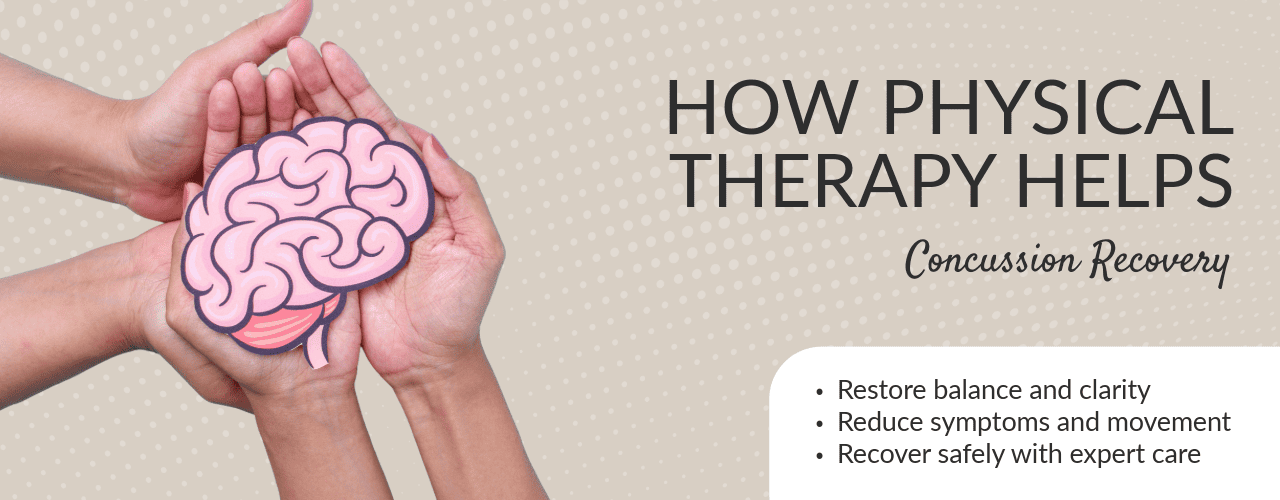
A concussion is a mild brain injury that can happen after a hit to the head, a fall, or any sudden jolt that shakes the brain. Symptoms may include headaches, dizziness, memory problems, or balance issues. While many people are told to rest and “wait it out,” this advice alone may not lead to full recovery. That’s where concussion rehabilitation through physical therapy makes a difference. Physical therapists provide targeted care that restores comfort, coordination, and confidence during healing.
Typical Concussion Care: What Most People Expect
Most patients receive the same advice after a concussion: rest, avoid screens, and return to normal life once symptoms improve. While rest is important early on, it doesn’t solve all of the physical problems that can follow a concussion.
Typical care often includes:
- A brief rest period at home
- Reduced screen time or mental effort
- Avoidance of sports and exercise
- A “wait and see” approach to symptoms
This kind of care works for some, especially if symptoms are mild and resolve quickly. But many people experience lingering effects that make daily life difficult. Symptoms like poor balance, motion sensitivity, neck pain, and fatigue are common after a concussion and often overlooked in standard recovery plans.
Patients who rely only on rest may feel unsure about what to do next. They may go back to school, work, or sports before they’re ready, increasing the risk of setbacks. Without active care, recovery may slow or stall.
Physical Therapy: A More Active and Personalized Approach
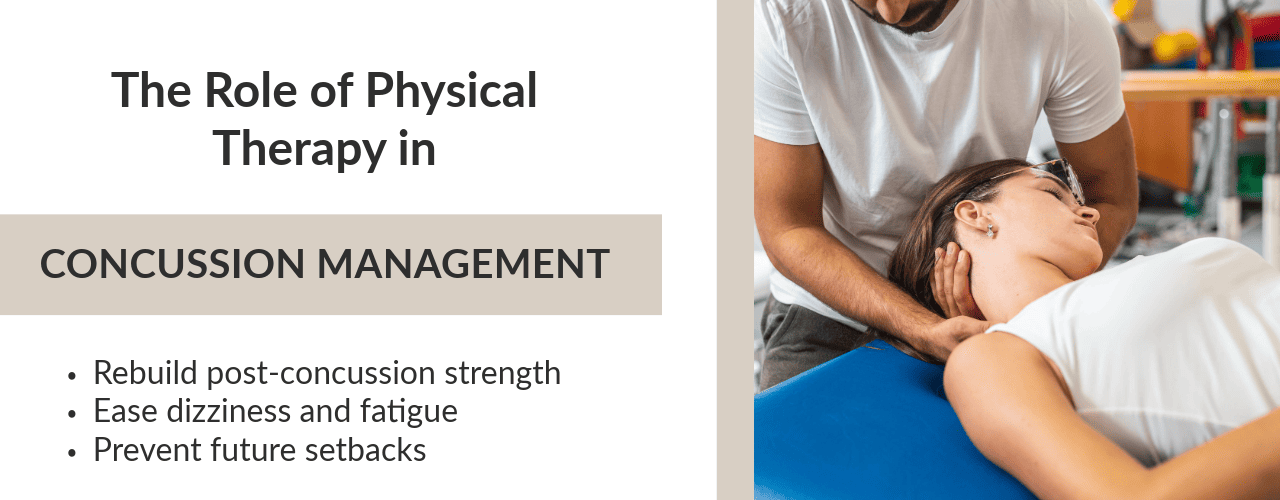
Physical therapy offers a different kind of recovery. Instead of waiting for symptoms to go away, therapists identify the areas that need support and build a treatment plan to help the brain and body work together again. Concussion rehabilitation through physical therapy focuses on specific challenges caused by the injury.
Key areas physical therapists address:
Vestibular system:
- Helps control balance and spatial awareness. If this system is disrupted, patients may feel dizzy or unsteady.
Cervical spine:
- Neck injuries often occur alongside concussions. Therapy improves neck motion and reduces pain or stiffness.
Visual-motor skills:
- Tracking, focusing, or scanning can be harder after a concussion. PT exercises retrain eye movement and coordination.
Balance and gait:
- Therapists assess posture and walking to prevent falls and restore safe movement.
Activity tolerance:
- Patients often struggle with fatigue or symptom flare-ups. PT helps pace return to activity without triggering symptoms.
Each plan is built around the patient’s needs. Therapists adjust exercises, intensity, and timing based on how the patient feels. This support improves confidence and helps patients move forward without fear of setbacks.
Comparing the Two: What Patients Actually Experience
Here’s how standard care and physical therapy-based concussion rehabilitation compare:
| Aspect | Rest-Only Approach | Physical Therapy Approach |
| Symptom Management | Limited to self-monitoring | Guided treatment for each symptom |
| Progress Tracking | Patient-managed | Therapist-monitored and adjusted |
| Neck or Balance Issues | Often missed or untreated | Actively addressed |
| Activity Return | Based on guesswork | Based on tested tolerance |
| Support System | Minimal or remote | In-person guidance and reassurance |
| Risk of Setback | Higher | Lower due to structured pacing |
| Recovery Confidence | Low | High with professional feedback |
Patients who go through concussion rehabilitation with a physical therapist often report feeling more in control. They understand their limits, know what to expect, and feel prepared to return to school, work, or sport safely.
Why Concussion Rehabilitation Should Include PT
Healing from a concussion is not just about waiting. It’s about restoring how the brain and body function together. Physical therapy provides the tools, knowledge, and support to guide that process.
When therapy is included early, patients often return to routine faster and with fewer complications. They’re less likely to experience lingering symptoms or reinjury. This matters not only for athletes, but for anyone who depends on clear thinking, balance, and comfort in daily life.
Therapy also helps reduce fear. Many patients feel anxious after a concussion, especially when symptoms don’t go away quickly. Having a plan, clear milestones, and expert support makes recovery feel manageable.
Move Forward with Confidence
If you’re recovering from a concussion and symptoms are lingering, you don’t have to wait and hope for the best. Concussion rehabilitation with a licensed physical therapist helps you recover safely and return to what matters most.
Our team understands how to treat the full impact of a concussion. We build customized therapy plans that address your unique needs and support your recovery at every step.
Contact Moore Myoworx today to learn how physical therapy can make concussion recovery clearer, safer, and more effective.

Leave a Reply