
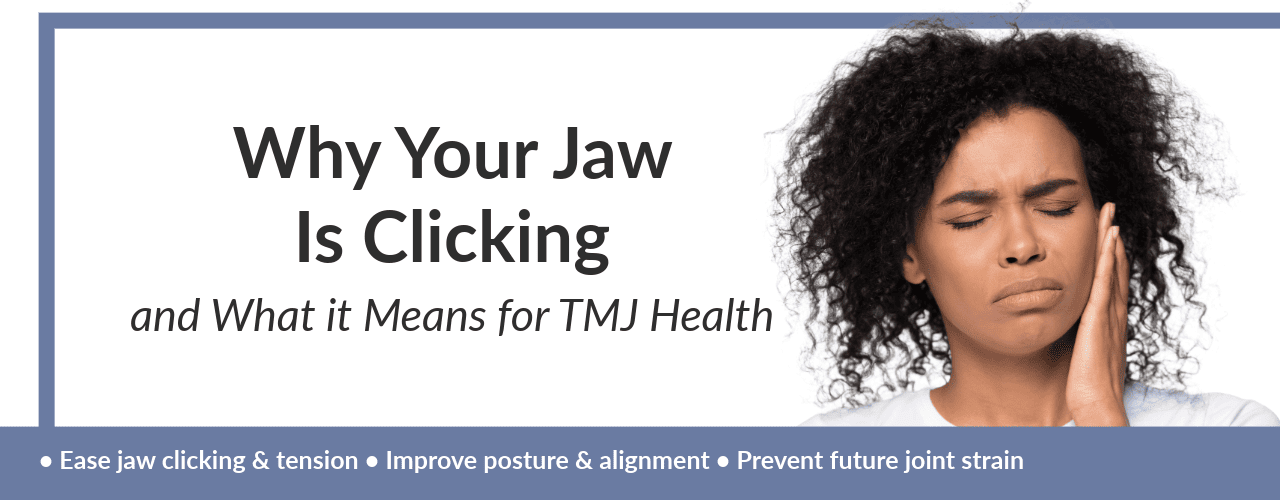
Have you ever noticed a pop, click, or snap when opening or closing your mouth? TMJ jaw clicking is surprisingly common. It’s also a sign that there’s something going on with your temporomandibular joint (TMJ).
Unfortunately, many patients ignore it, believing it’s harmless or just something they have to live with. But clicking in the jaw can be a warning sign that your TMJ—the hinge that connects your jaw to your skull—isn’t functioning as it should.
At Moore Myoworx, we specialize in head-related conditions and offer several unique techniques to address the root causes of TMJ issues. So let’s do a deep dive into the TMJ, including what we can do to address dysfunction.
When the Jaw Gets Noisy
TMJ jaw clicking typically occurs when the disc inside the joint moves out of place or becomes misaligned. This disc helps cushion and guide the movement of the jaw. When it isn’t where it should be, the result can be clicking, popping, or a grinding sensation during movement.
It’s easy to dismiss jaw clicking as just “a weird sound,” but the underlying dysfunction can escalate over time if left untreated.
What Causes The Clicking?
- Muscle tension from clenching or grinding (often stress-related)
- Poor posture, especially forward head posture
- Direct trauma to the jaw or head
- Repetitive motion or overuse (such as frequent gum chewing)
- Imbalance from previous concussions or head injuries
Additional TMJ Symptoms You Shouldn’t Ignore
However, clicking is just one piece of the TMJ puzzle. Often, it’s accompanied by other symptoms that are misdiagnosed or misunderstood. Additional signs that your TMJ needs attention include:
- Headaches that start near the temples
- Facial or jaw pain, especially after talking or chewing
- Limited or uneven mouth opening
- Ear symptoms like fullness, ringing, or pain
- Neck tightness or tension
- Dizziness or a sense of imbalance (especially after a concussion)
Many patients don’t realize these symptoms are connected. In fact, it’s common for people to visit dentists, ENT specialists, or even neurologists before discovering the true source of the problem.
Solutions That Work: Healing TMJ with Precision and Care
At Moore Myoworx, we don’t rely on injections, surgery, or devices to address TMJ disorders. Instead, we use targeted techniques that focus on restoring natural function and alignment.
Every treatment plan is tailored to your specific anatomy, movement patterns, and symptoms. We evaluate how your jaw functions in real life when you chew, speak, or sleep, and design a program to help you feel better, faster.
Some of the options we have available include:
Manual Therapy
- Hands-on techniques that release tight muscles, improve joint mobility, and restore balance across the head, neck, and jaw.
Therapeutic Exercises
- Custom exercises designed to strengthen postural muscles, improve jaw mechanics, and reduce strain on the TMJ.
Postural Re-education
- Personalized guidance on improving overall posture to reduce forward head position and associated jaw strain
Beyond the Clinic: TMJ Jaw Clicking Self-Care You Can Start Today
While professional care is essential, small changes in your daily life can reduce jaw stress and improve healing. Try these TMJ-friendly habits:
- Avoid chewing gum, hard foods, or wide yawns
- Maintain good posture, especially while working at a desk
- Practice relaxed breathing to reduce overall muscle tension
- Use warm compresses to ease tight jaw muscles
- Stay aware of clenching or grinding and gently relax the jaw when possible
If your symptoms worsen with stress or screen time, consider taking regular breaks and using movement to release tension.
Let’s Get to the Root of the Click
TMJ jaw clicking is more than an annoying sound. It’s a message from your body that something isn’t moving as it should. Left unchecked, it can lead to discomfort, dysfunction, and frustration. But with the right support, your jaw can heal.
At Moore Myoworx, we’re here to help you understand what’s going on and give your jaw the focused care it deserves. Our specialized physical therapy and manual techniques are designed for people like you who are dealing with head-based pain and movement issues.
Reach out to Moore Myoworx today to schedule a personalized evaluation and take the first step toward lasting TMJ health.

Leave a Reply