
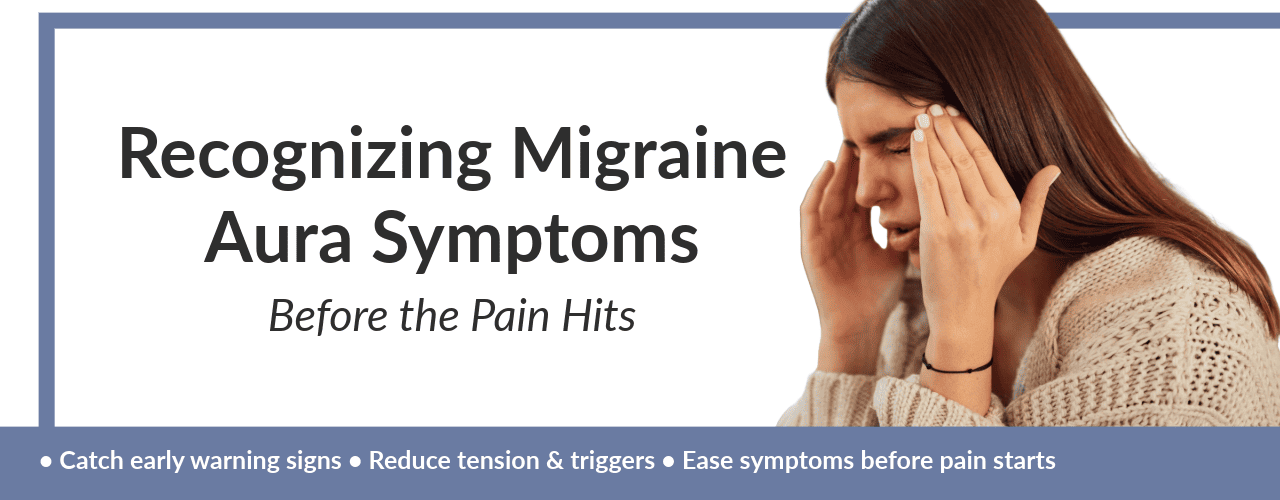
Some migraines start with flashing lights or blurry vision. Others begin with tingling in the fingers or trouble forming words. These early changes are called migraine aura symptoms, and they are warning signs that the pain is coming. Recognizing them early gives people time to rest, prepare, and possibly lessen how bad the migraine becomes. Physical therapy can help reduce some of the physical tension that makes migraines worse and teach calming techniques that may shorten the episode.
Seeing the Storm Before It Starts: What Aura Really Means
Migraine aura symptoms are brief neurological changes that appear before or during a migraine. These symptoms usually develop over five minutes and can last up to an hour. Not every person with migraines gets auras, but for those who do, the signs are often consistent each time.
Common migraine aura symptoms include:
- Flickering lights, blind spots, or zigzag lines in vision
- Numbness or tingling in the face, hands, or arms
- Trouble speaking clearly or finding words
- Muscle weakness or a feeling of heaviness in one side of the body
These changes come from the brain, not the eyes or muscles. They signal changes in nerve activity or blood flow before the migraine pain begins.
Triggers That Spark the Warning Signs
Certain triggers increase the chance of having an aura before a migraine. These can be different for each person, but some appear often in migraine cases.
Common triggers include:
- Stress or anxiety
- Poor sleep or inconsistent sleep patterns
- Bright or flickering lights
- Hormonal changes, such as those during menstruation
- Skipping meals or changes in blood sugar
- Foods with additives like MSG or artificial sweeteners
Keeping a journal of symptoms and what happened before the aura can help people notice patterns. This helps avoid known triggers and prepare for migraines more effectively.
Physical Therapy’s Role in Calming the Oncoming Wave
Physical therapy does not treat the migraine itself, but it can reduce tension and improve movement that may trigger or worsen symptoms. Some migraine aura symptoms are linked to tight neck muscles, poor posture, or jaw problems. A physical therapist can assess how these areas affect a patient’s nervous system.
- Manual therapy to ease neck or jaw tension
- Postural training to reduce stress on the upper spine
- Relaxation exercises to calm the nervous system
- Light aerobic activity to improve circulation and reduce stiffness
These methods support the body’s ability to manage stress and lower the chances of repeated migraines. In some cases, patients report fewer or less intense auras over time when physical tension is managed well.
When the Signal Shifts: Knowing When to Get Help
Migraine aura symptoms are usually harmless, but sudden changes can point to something more serious. If symptoms appear for the first time, or if they feel different or last longer than usual, it’s important to speak to a healthcare provider.
Seek medical help right away if:
- Vision loss or changes last more than 60 minutes
- Weakness or numbness becomes severe
- Aura symptoms happen without a headache
- Symptoms start after age 50
- There is a sudden, severe headache with aura
These could be signs of a different problem, such as a stroke or brain disorder. Always get new or worsening symptoms checked.
Simple Tools for Catching Aura Early
Early action can sometimes soften the effects of a migraine. People who experience migraine aura symptoms regularly often benefit from having a plan.
Helpful steps include:
- Keep a migraine journal to track patterns
- Notice your first symptom, even if it seems small
- Take prescribed medication as soon as symptoms begin
- Use low lighting or a cool, quiet space to rest
- Try deep breathing or gentle neck stretches to reduce tension
Physical therapists can teach breathing and movement strategies that help settle the nervous system during an aura. These small changes can improve how well patients handle upcoming migraines.
Take Charge Before It Escalates
If you’ve been dealing with warning signs like blurred vision or tingling before your headaches, you may be experiencing migraine aura symptoms. Recognizing these signs early gives you time to prepare and possibly reduce how long or intense your migraine lasts. At Moore Myoworx, our physical therapists can help identify tension points, improve posture, and guide you in calming exercises that support your overall care plan.
Reach out to Moore Myoworx to learn how physical therapy can be part of your approach to managing migraine aura symptoms and taking control before the pain begins.




Leave a Reply